Klara Hughes · 28 October 2026
Westtal's Festival Surge Inspires Creative Funding Models for Regional Transit Upgrades
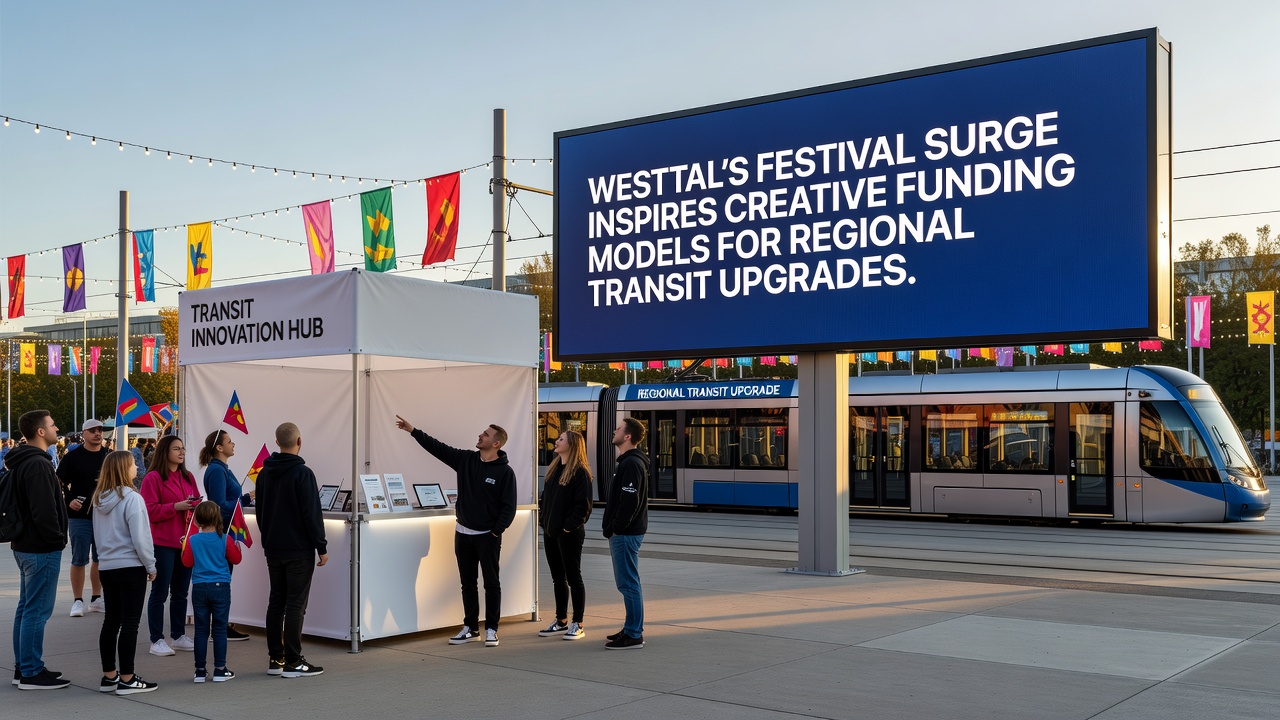
Westtal has seen a marked increase in festival activity over recent years, and observers note that this surge has prompted local authorities to explore innovative approaches to financing transit improvements across the region. Data from regional tourism records indicate that attendance at major events climbed steadily through 2025, setting the stage for expanded programming in October 2026 when several multi-day gatherings are scheduled to overlap with peak harvest periods and cultural showcases.
Those who track visitor patterns report that festival-related travel demands have placed additional pressure on existing bus and rail lines, which in turn has accelerated discussions about dedicated revenue streams for upgrades such as extended routes, electric vehicle fleets, and station modernizations. Research indicates that communities facing similar seasonal spikes often turn to event-tied financing mechanisms, and Westtal officials appear to be adapting several of those concepts to fit local conditions.
Festival Growth and Transit Strain
Records compiled by the Westtal Regional Tourism Board show that combined attendance across the valley's primary festivals exceeded 180,000 participants in 2025, a figure that represents a 22 percent rise from the previous year. This growth has coincided with higher volumes on key transit corridors, particularly during evening hours when events conclude and attendees return to outlying towns. Planners have documented instances where service delays occurred on lines serving the central festival grounds, prompting calls for both immediate capacity increases and longer-term infrastructure investments.
Analysts from the European Transport Safety Council have examined comparable situations in other mid-sized European valleys, and their findings suggest that temporary demand surges can be leveraged to justify permanent system enhancements when paired with stable funding sources. Westtal's approach builds on this observation by linking festival revenues directly to transit accounts rather than relying solely on annual budget allocations.
Emerging Funding Mechanisms
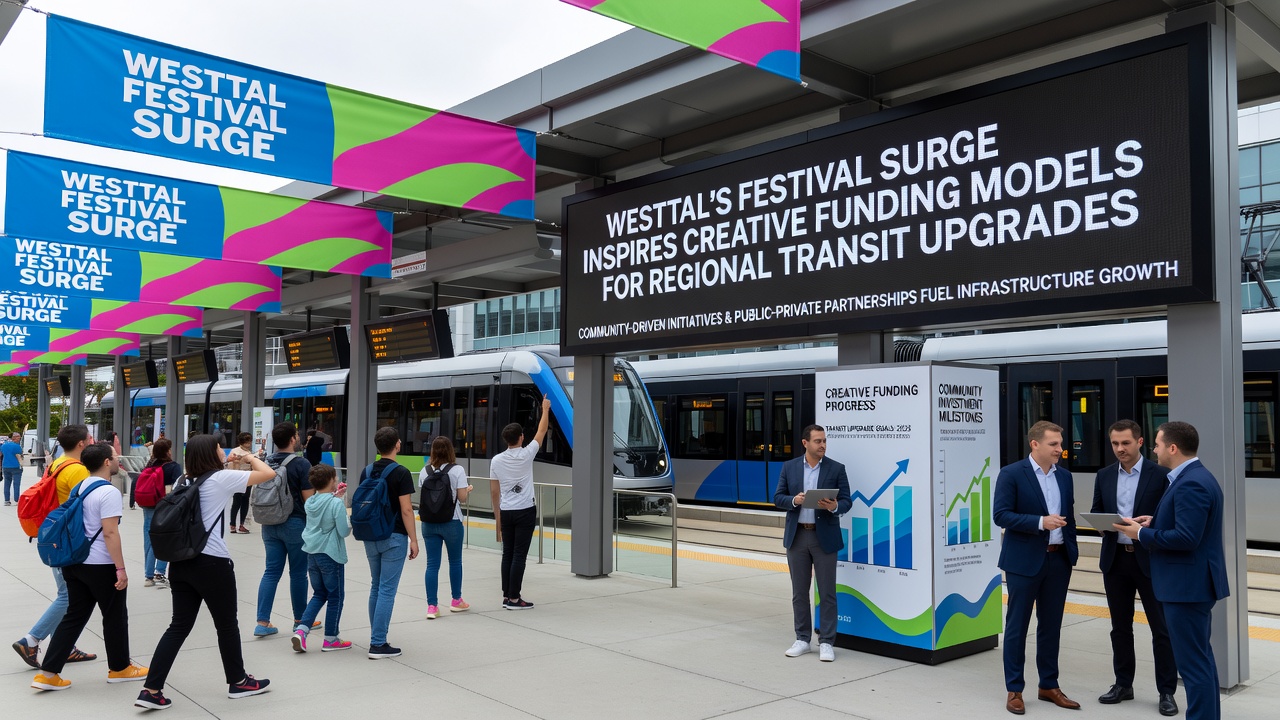
One model gaining traction involves a modest per-ticket contribution collected at festival entry points, with proceeds earmarked for transit capital projects. Early pilots conducted during smaller spring events generated sufficient returns to cover preliminary engineering studies for two new park-and-ride facilities. Another mechanism under review draws on public-private partnerships where transit operators collaborate with event organizers to sponsor shuttle services in exchange for branding opportunities and priority access lanes during peak periods.
Figures released by the German Federal Ministry of Transport and Digital Infrastructure reveal that regions employing blended financing strategies have achieved faster project timelines compared with those dependent on single-source grants. Westtal administrators have cited these national statistics while designing their own hybrid framework, which also incorporates micro-levies on short-term accommodation bookings tied to festival weekends.
Implementation Timeline and October 2026 Outlook
Project schedules released by the Westtal Transit Authority place the first phase of upgrades, including fleet electrification and route extensions, for completion ahead of the October 2026 festival cluster. Coordination meetings held in late 2025 established joint working groups that include festival producers, municipal planners, and representatives from regional rail operators. These groups meet monthly to align event logistics with construction milestones, ensuring that temporary service adjustments do not disrupt ongoing upgrades.
Additional revenue tools under consideration include targeted advertising contracts along upgraded corridors and data-sharing agreements that allow transit planners to refine demand forecasts using anonymized festival ticketing information. Observers note that such integrated planning reduces the risk of over- or under-building capacity during future event cycles.
Comparative Approaches from Other Regions
Similar strategies have appeared in other jurisdictions facing seasonal tourism pressures. Reports from Transport Canada describe how certain prairie communities have used festival surcharges to subsidize rural transit extensions, while documentation from the Australian Department of Infrastructure, Transport, Regional Development, Communications and the Arts highlights successful integration of event-based levies with long-term rail maintenance funds. Westtal planners have reviewed these cases during policy workshops, adapting elements that align with valley geography and existing governance structures.
Academic studies published by the University of Stuttgart's Institute for Transport Research further support the viability of linking cultural events to infrastructure finance, demonstrating measurable increases in ridership retention when service improvements are visibly connected to popular local activities. Westtal's pilot programs will provide additional data points for ongoing research in this area.
Conclusion
The interplay between Westtal's expanding festival calendar and regional transit needs has produced a set of funding models that tie event revenues to capital improvements. As October 2026 approaches, the outcomes of these initial implementations will offer concrete examples for other communities exploring parallel solutions. Continued monitoring by local authorities and external research bodies will track ridership changes, revenue stability, and project delivery rates throughout the coming festival season.