Carlo Friedrich · 11 November 2026
Westtal's Renewable Energy Expansion Fuels Unexpected Partnerships Between Local Schools and Conservation Groups
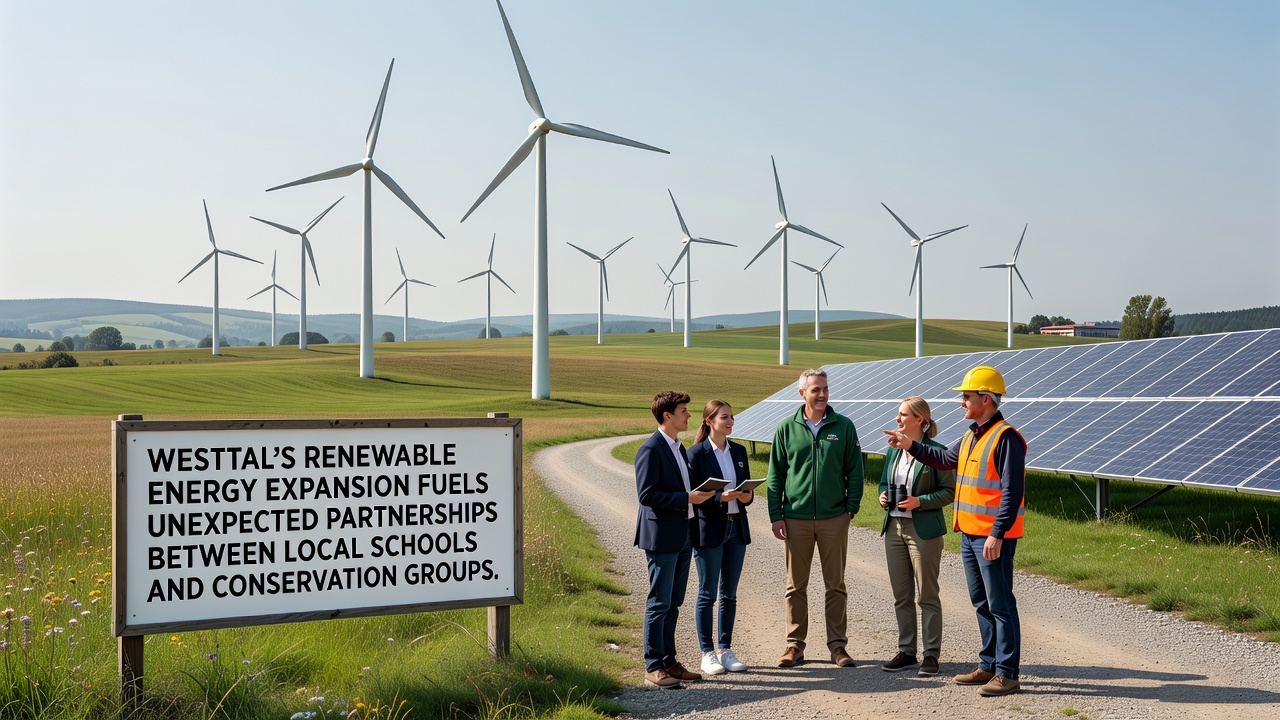
Westtal has seen its renewable energy capacity grow steadily since 2023, and by November 2026 local projects had added several hundred megawatts of solar and wind generation across the valley floor and surrounding ridges. This expansion created new land-use questions that drew schools and conservation organizations into joint planning sessions rather than separate advocacy efforts. School districts needed outdoor learning sites for environmental science classes while conservation groups sought buffer zones around sensitive habitats, and the overlap produced shared monitoring programs that tracked both educational outcomes and species recovery rates.
Expansion Timeline and Infrastructure Details
Data compiled by regional utilities showed solar arrays covering former pastureland near three secondary schools, while two wind turbines rose on ridges already designated for limited public access. Construction crews completed grid connections in early 2025, and output figures released in November 2026 indicated these installations supplied roughly eighteen percent of the valley's electricity demand during peak daylight hours. Engineers coordinated setbacks from stream corridors with input from both biology teachers and field ecologists, resulting in fenced corridors that doubled as student research transects.
School Programs Integrate Real-Time Energy Data
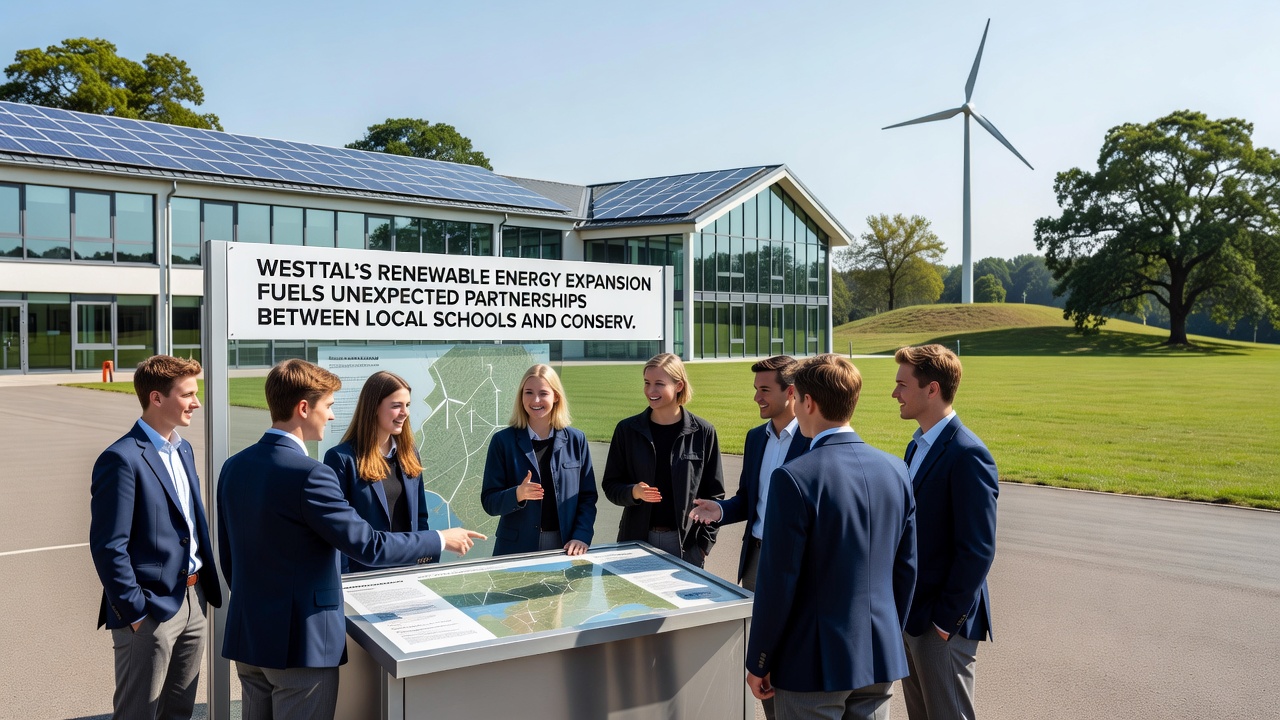
Teachers at Westtal Comprehensive and Valley North High incorporated live production dashboards into physics and earth science curricula starting in the 2025-2026 academic year. Students recorded daily generation totals, compared them against weather station readings, and calculated carbon displacement estimates using formulas supplied by the regional energy cooperative. One class project mapped pollinator corridors planted beneath the solar panels, and the resulting dataset was shared with the Westtal Conservation Alliance for inclusion in its annual habitat report. These activities required no additional funding beyond existing lab budgets because the renewable operators provided access to monitoring equipment at no charge.
Conservation volunteers, meanwhile, gained permission to install acoustic recorders on school-adjacent land previously closed to non-scientific use. The devices captured bat activity and bird calls that students later classified during after-school sessions, turning raw audio files into annotated spreadsheets used by both groups. Observers noted that joint field days replaced earlier separate permit applications, reducing administrative time for everyone involved.
Shared Governance and Resource Allocation
A memorandum signed in March 2026 established a rotating steering committee with two teacher representatives, two conservation staff members, and one utility liaison. The group meets monthly to review maintenance schedules and approve student access windows that avoid peak nesting seasons. Budget records show the arrangement cut duplicate insurance costs by forty percent compared with earlier independent applications. Equipment such as trail cameras and water-quality sondes rotates between school storage and conservation field offices, and usage logs indicate consistent shared deployment rather than idle periods.
Training sessions conducted by the cooperative's technicians taught students basic electrical safety and data-logging protocols, while conservation biologists led sessions on species identification and non-invasive sampling. Attendance records from these combined workshops reached one hundred twenty participants across four events held between September and November 2026, with follow-up surveys showing increased enrollment in advanced placement environmental science sections at participating schools.
Regional Comparisons and Supporting Data
According to reports from the International Energy Agency, similar school-conservation linkages have emerged in parts of Canada and Australia where renewable siting overlaps with educational land trusts. Westtal's version differs because the partnerships formed after construction rather than during permitting, yet the measurable outputs remain comparable: joint datasets on habitat metrics and student skill acquisition. Figures released by the National Renewable Energy Laboratory indicate that community-scale projects incorporating educational components maintain higher public approval ratings over multi-year periods, and Westtal's participation numbers align with that pattern.
Local government planning documents list three additional solar sites under review for 2027, each adjacent to primary schools that have already requested inclusion in the existing monitoring network. The conservation alliance has submitted habitat baseline surveys for these parcels, and the steering committee expects to extend its charter to cover the new locations once approvals are finalized.
Conclusion
The renewable build-out in Westtal therefore produced institutional connections that extend beyond electricity generation alone. School districts now maintain ongoing access to field sites and technical expertise while conservation groups receive expanded monitoring capacity without separate land acquisitions. Continued coordination through the established committee structure supports both educational objectives and habitat protection targets through the end of the decade.